
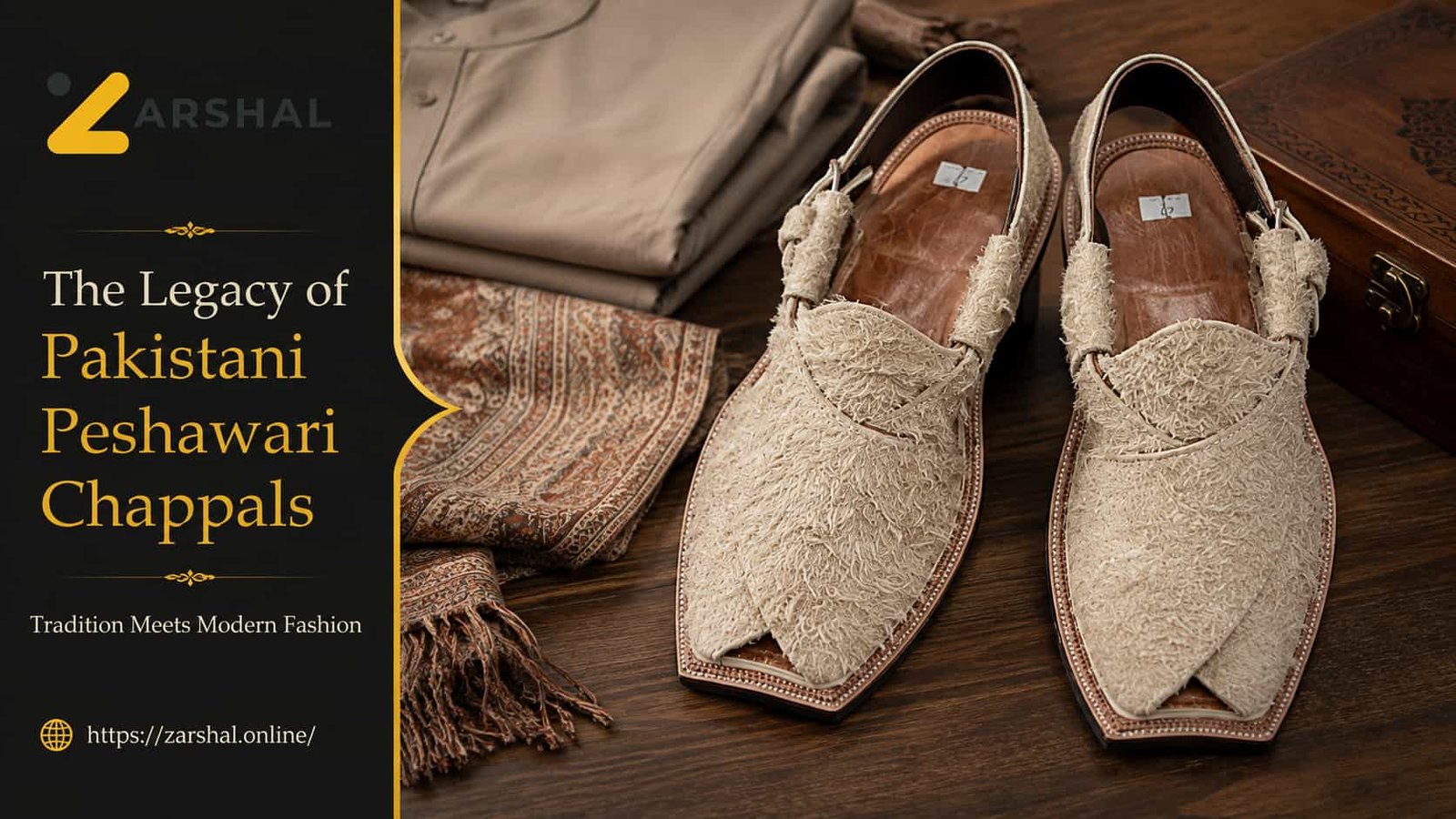
Peshawari chappals are more than traditional footwear. For Pakistani men, they sit at the meeting point of regional craftsmanship, cultural identity, everyday comfort and modern menswear.
The style that was once closely associated with Pashtun dress is now worn with everything from shalwar kameez and kurta pajama to waistcoats, jeans and smart-casual clothing. But modern shoppers also face more choice. Kaptaan, Norozi, Smart Zalmi, suede, medium-sole and other designs can look quite different on the foot.
This guide explains where Peshawari chappals come from, how their design has evolved, what separates today’s main styles, and how to choose the right option based on your clothing, occasion, fit and material preference.
What Makes Peshawari Chappals Special?
Peshawari chappals are traditional Pakistani men’s footwear known for their distinctive open construction, secure upper shape and strong connection with Pashtun culture and craftsmanship in Khyber Pakhtunkhwa. Modern versions now include styles such as Kaptaan, Norozi and Smart Zalmi, along with suede finishes and different sole profiles, giving Pakistani men options for Jummah, Eid, weddings, daily wear, office dressing and smart-casual outfits.
If you already understand the heritage and want to compare current designs, explore Zarshal’s Peshawari chappal collection and use the guidance below to decide which style suits you.
Where Did the Peshawari Chappal Come From?
Its Connection With Peshawar and Pashtun Culture
The Peshawari chappal is strongly associated with Khyber Pakhtunkhwa and Pashtun dress. Peshawar has long remained an important centre for the craft, with shoemakers working around areas such as Jhangirpura near Qissa Khwani Bazaar.
Its original appeal was practical. The open structure suited regional clothing and warm conditions, while the strong construction made the footwear suitable for repeated use.
Over time, the chappal moved beyond its regional identity. It became common across Pakistan and increasingly appeared beside modern clothing, giving the same traditional footwear a wider fashion role.
The Role of Charsadda and Regional Craftsmanship
Charsadda is also closely connected with the Peshawari and Pashtun footwear tradition. Reporting on the industry has repeatedly linked both Peshawar and Charsadda with recognised chappal craftsmanship and supply to markets elsewhere in Pakistan.
That regional connection remains visible in today’s product naming. Zarshal, which operates from Charsadda, carries a dedicated Charsadda chappal collection containing Takidar, Panjedar, Gol T and other traditional style families alongside broader Peshawari designs.
How Traditional Peshawari Chappals Are Made
Leather Cutting and Upper Construction
Traditional chappal construction begins by shaping the components that will form the upper and sole. Leather is cut, sewn and prepared before it is attached to the base.
The shape of the upper matters because it determines how the chappal holds the foot and how traditional or modern the finished profile appears.
Stitching, Sole Preparation and Assembly
Peshawar-based artisans interviewed by Associated Press of Pakistan described the footwear passing through several skilled stages, including sole preparation, leather sewing, fitting, stretching and finishing.
This helps explain why two chappals that appear similar from a distance can feel quite different when you look closely at the sole, edge finishing, stitching and shape.
For shoppers, construction should therefore matter as much as color. Before ordering, inspect the product description and images for the upper material, sole type, fit structure and finishing instead of choosing from appearance alone.
Why Handmade Finishing Can Look Slightly Different
Handmade and natural-material footwear may not look completely identical from pair to pair. Small differences in leather grain, texture, stitching or surface finishing can occur.
Zarshal’s live product guidance also notes that handmade products and leather or suede surfaces may show minor natural differences. That does not mean obvious damage should be ignored, but perfectly uniform texture should not be expected from every handmade or naturally textured upper.
How Peshawari Chappals Changed From Traditional Footwear to Modern Fashion
The basic cultural identity remains, but today’s Peshawari chappal market is much broader than one black leather design.
Modern versions change the color, upper finish, edge shape and sole profile while retaining recognisable features of Pakistani chappal styling.
From Traditional Black and Brown to Modern Colors
Black and brown remain easy choices because they work naturally with Pakistani eastern wear. Black can sit comfortably with white, cream, grey, navy or darker shalwar kameez, while brown and camel create a warmer look beside beige, cream and earthy clothing.
Modern collections also include burgundy, mustard, blue, off white and double-shade combinations. These colors do not automatically indicate a different construction. Their main role is to change the visual character and outfit pairing.
If you want a pair for many different outfits, start with a neutral shade. If the chappal is intended for festive or statement dressing, a stronger color or double-shade finish can make more sense.
From Classic Leather to Suede Finishes
Smooth leather produces the familiar structured look many buyers associate with traditional Peshawari footwear. Suede creates a softer, more textured surface that can feel more contemporary visually.
That difference matters beyond appearance. Suede needs different care and should be protected more carefully from rain, mud and excessive moisture. Regular leather shoe polish should not be applied to a suede upper.
Choose the material according to how you plan to use and maintain the footwear, not only how it looks in a product photo.
Changes in Sole Profiles and Silhouettes
Today’s Zarshal catalogue shows several sole-related categories and product descriptions, including tyre soles, double soles, medium soles, everyday-use soles and Vebram-style sole designs.
A thicker or more structured sole changes the visual weight of the footwear. A medium sole can produce a more balanced profile, while a double sole can create a stronger traditional presence.
The important point is not to assume that every style name uses one fixed sole. Check the specification of the exact product you are considering.
Main Peshawari Chappal Styles Available Today
Understanding the major style families makes choosing much easier.
Kaptaan Chappal: Classic and Versatile
Kaptaan chappals suit buyers who want a recognisable traditional shape that can move between daily eastern wear and more dressed-up Pakistani outfits.
Zarshal’s Black Kaptaan Chappal is a clear example. The live product page specifies a genuine leather upper, soft padded footbed and durable tyre sole. Its black finish works with shalwar kameez, kurta pajama, waistcoats and casual clothing.
Best for: a buyer who wants a classic all-round Peshawari look.
Why choose it: the leather upper provides the traditional appearance, while the padded footbed and tyre sole make the design practical for repeated use.
Norozi Chappal: Structured and Traditional
Norozi is a strong choice when you prefer a more structured visual presence with traditional eastern clothing.
The Black Quetta Norozi Chappal with Double Sole uses a classic black Quetta Norozi shape with double-sole construction. Zarshal lists it for traditional, festive, office and semi-formal use, including shalwar kameez, kurta pajama and waistcoats.
Best for: Eid clothing, weddings, waistcoat combinations and men who like a stronger traditional profile.
Why choose it: the double sole gives this specific model a more substantial base, while the black finish keeps outfit matching simple.
Smart Zalmi Chappal: Cleaner and More Contemporary
Smart Zalmi works well for shoppers who like Pakistani footwear but do not want a particularly heavy or traditional-looking outline.
The Premium Black Smart Zalmi Round Edge Chappal has a smooth round-edge profile, open slip-on fit, comfortable footbed and everyday-use sole. Zarshal positions the design for shalwar kameez, kurta pajama, waistcoats, jeans and casual trousers.
Best for: office-casual dressing, family visits, Jummah and men who mix eastern and Western clothing.
Why choose it: the rounded edge produces a cleaner visual line, which makes the chappal easier to pair with contemporary outfits.
Suede Peshawari Chappal: Softer Modern Styling
A suede Peshawari chappal keeps the cultural shape while changing the surface texture and overall mood.
Zarshal’s Camel Medium Sole Suede Peshawari Chappal uses a camel-colored suede upper and medium-profile sole. Its neutral shade pairs with shalwar kameez, kurta pajama, waistcoats and smart-casual outfits.
Best for: someone who wants a softer, more contemporary finish.
Why choose it: the suede changes the visual texture, while the medium sole sits between a very thin base and an extra-thick profile.
Other Traditional Style Families to Know
Pakistani shoppers may also see names such as Takidar, Panjedar, Gol T, GoGo, Zardari and Vebram sole chappals. Zarshal currently organises several of these under its wider Peshawari and Charsadda footwear collections.
Treat these names as starting points for comparison. Always move from the style name to the exact product specifications before deciding.
Peshawari Chappal Style Comparison: Which Type Fits Your Needs?
Use this comparison as a quick decision tool. The product-specific sole descriptions below refer only to the verified examples discussed in this guide.
| Style | Overall Look | Verified Example | Sole / Construction | Best For | Outfit Pairing | Care |
|---|---|---|---|---|---|---|
| Kaptaan | Classic, bold | Black Kaptaan | Tyre sole | Daily and traditional wear | Shalwar kameez, kurta pajama, waistcoat, casual clothing | Smooth leather care |
| Quetta Norozi | Structured, traditional | Black Quetta Norozi | Double sole | Eid, weddings, semi-formal eastern wear | Shalwar kameez, kurta pajama, waistcoat | Check exact material guidance |
| Smart Zalmi | Cleaner, contemporary | Premium Black Round Edge | Everyday-use sole | Smart casual, office casual, mixed wardrobe | Eastern wear, jeans, casual trousers | Keep dry and clean gently |
| Suede | Soft, modern | Camel Medium Sole Suede | Medium-profile sole | Smart casual and modern traditional dressing | Kurta, shalwar kameez, waistcoat | Dry brushing and moisture protection |
The table shows why choosing only by product name can lead to the wrong pair. Material, sole construction, silhouette and care needs can matter just as much as the style family.
How to Choose the Right Peshawari Chappal
Choose by Traditional vs Modern Appearance
Start with the silhouette you actually want on your foot.
Kaptaan and Norozi styles make sense if most of your wardrobe is shalwar kameez, kurta pajama or waistcoat combinations and you prefer a stronger traditional identity.
Smart Zalmi and selected suede styles make more sense if your wardrobe moves between eastern clothing, jeans and casual trousers. They retain Peshawari influence without looking as visually heavy.
Choose by Sole Preference
Do not assume thicker always means better. Think about the appearance and wearing feel you prefer.
A double sole can create a stronger, more structured base. A medium sole may look more balanced for regular wear, while the verified Black Kaptaan uses a tyre sole and the Premium Black Smart Zalmi Round Edge uses an everyday-use sole.
Read the exact product description because sole construction can change between models within the same wider style family.
Choose Between Leather and Suede
Choose smooth leather when you want a classic finish and simpler everyday surface care.
Choose suede when texture is part of the look you want and you are comfortable giving the material more attention. Suede should be brushed dry, kept away from excessive moisture and cleaned only with products suitable for suede.
For Pakistan’s hotter months, the open chappal structure can feel more suitable than heavily enclosed footwear for many everyday situations. During wet conditions, however, suede needs more protection than its appearance may suggest.
Choose by Color
Black is the lowest-risk styling choice if your wardrobe contains white, grey, navy, cream or darker eastern outfits. It works for Jummah, office wear and formal family events without demanding much coordination.
Brown and camel tones suit cream, beige, olive and other earthy combinations. They often create a softer look than black.
Burgundy or double-shade designs can work well when the footwear is meant to become a stronger part of an Eid, wedding or mehndi outfit.
Blue and off-white suede options create a more modern impression. They require more thoughtful outfit matching but can work especially well with lighter clothing.
Which Peshawari Chappal Works Best With Pakistani Clothing?
With Shalwar Kameez
Shalwar kameez gives you the widest choice because traditional chappals were built around Pakistani and Pashtun clothing.
Kaptaan, Norozi, Takidar and Charsadda styles all fit naturally here. Choose based on how formal and structured you want the final outfit to appear.
A black Kaptaan is easy for everyday and Jummah wear. A stronger Norozi profile can suit a more dressed-up shalwar kameez.
With Kurta Pajama and Waistcoat
A waistcoat raises the formality of the outfit, so the footwear should also look intentional.
Norozi works well if you want a stronger traditional base. Kaptaan keeps the outfit classic, while Smart Zalmi can produce a cleaner look when the kurta and waistcoat themselves are more contemporary.
With Jeans and Casual Trousers
This is where modern Peshawari variations become especially useful.
Smart Zalmi’s smoother profile is easier to combine with jeans or straight casual trousers. Suede can also work because its softer surface reduces the visual gap between traditional footwear and modern clothing.
Keep the rest of the outfit simple. The goal is to make the chappal feel intentional rather than added as an afterthought.
Which Peshawari Chappal Should You Wear for Different Occasions?
Jummah and Mosque Wear
For Jummah, black and brown are easy choices because they pair naturally with common white, cream, grey and darker shalwar kameez.
Kaptaan and Smart Zalmi are both practical options. The Smart Zalmi Round Edge also uses an open slip-on structure, which is convenient when footwear needs to be removed and worn again during mosque visits.
Eid
Eid gives you more freedom to match the footwear to the complete outfit.
Kaptaan works well for a classic appearance. Norozi can add more structure to a waistcoat or carefully tailored shalwar kameez, while Smart Zalmi is useful when you want something cleaner and less traditional-looking.
Suede can work especially well with cream, beige or pastel Eid clothing, provided weather conditions allow you to keep the upper dry.
Weddings and Mehndi Functions
Formal family events often suit footwear with a stronger visual identity.
A Black Quetta Norozi works naturally with black, cream or darker traditional outfits. Burgundy, double-shade and distinctive regional styles can be considered when the clothing itself has more detail.
For a cleaner kurta-and-waistcoat combination, Smart Zalmi is a useful alternative.
Family Gatherings and Dinners
You usually do not need the most formal chappal in your wardrobe for a family dinner.
Smart Zalmi, suede and classic Kaptaan designs work well because they remain culturally appropriate without making the outfit feel overly ceremonial.
Office and Smart-Casual Wear
Choose a restrained color and cleaner profile.
Black Smart Zalmi is particularly easy to match with plain shalwar kameez, kurta combinations and casual trousers. Black Kaptaan is another option when you want stronger traditional character.
Which Zarshal Peshawari Chappal Matches Your Style?
If you have reached the point where several styles appeal to you, use the need first and product second.
Choose Black Kaptaan if You Want a Classic All-Round Style
Need: You wear traditional clothing regularly but still want footwear that can move into casual settings.
Feature: Zarshal’s Black Kaptaan uses a genuine leather upper, padded footbed and tyre sole.
Benefit: You get the recognisable Kaptaan shape with construction designed for routine Pakistani wear.
Buying reason: Choose it when versatility matters more than having an especially modern or decorative profile.
Choose Black Quetta Norozi if You Prefer a Stronger Traditional Look
Need: You want footwear that carries more visual weight beside formal eastern clothing.
Feature: The verified Black Quetta Norozi uses double-sole construction and a structured traditional shape.
Benefit: The footwear creates a firmer, more defined base under shalwar kameez, waistcoats and semi-formal eastern clothing.
Buying reason: Choose it if weddings, Eid clothing or traditional formal wear make up a large part of your intended use.
Choose Smart Zalmi if You Prefer Modern Styling
Need: You want a Peshawari-inspired chappal that can move comfortably between traditional and casual outfits.
Feature: The Premium Black Smart Zalmi Round Edge uses a smooth rounded edge, open slip-on shape and everyday-use sole.
Benefit: The cleaner border looks less bulky beside jeans, casual trousers and modern kurta combinations.
Buying reason: Choose it if you want the cultural character of the chappal without committing to the strongest traditional silhouette.
Choose Camel Suede if You Want a Softer Contemporary Finish
Need: You like traditional footwear but want texture and a lighter-looking finish.
Feature: The Camel Medium Sole Suede Peshawari Chappal has a camel suede upper and medium-profile sole.
Benefit: The material produces a softer visual appearance, while the neutral camel tone works with several Pakistani outfit colors.
Buying reason: Choose it when styling is important and you are prepared to protect suede from moisture and use the correct care routine.
How Should a Peshawari Chappal Fit?
A Peshawari chappal should feel secure without pressing tightly against the toes or sides. It should also not be so loose that your foot moves excessively while walking.
Measure From Heel to Longest Toe
For more reliable online sizing, measure your foot rather than relying only on the number printed inside another pair.
Stand on a flat sheet of paper, mark the back of the heel and the end of the longest toe, then measure the distance between those points. Zarshal provides this method in its current suede sizing guidance, while its Norozi page also advises comparing foot length against the product’s available size information.
Consider Foot Width
Length is only part of the fit.
A broad foot may feel tight in a shape that fits correctly from heel to toe, while a narrow foot can move too much in an overly generous fit. Consider whether your foot is narrow, regular or broad before selecting.
Do not automatically choose a much longer size just to create extra width. Zarshal’s suede guidance warns that excessive length can affect walking stability and overall fit.
Check the Product’s Specific Size Guidance
Different chappal shapes can sit differently on the foot.
Always review the exact product page before ordering. If your measurement falls between sizes or your feet are unusually broad or high-arched, confirm sizing rather than depending on the assumption that the material will stretch enough to correct a poor size choice.
Zarshal’s Norozi guidance specifically advises shoppers not to depend on stretching to fix an unsuitable size.
Are Peshawari Chappals Comfortable for Daily Wear?
They can be suitable for daily wear, but comfort depends on the specific construction and correct fit rather than the words “Peshawari chappal” alone.
Footbed Construction
A padded footbed can change how a chappal feels during repeated standing and walking.
For example, the Black Kaptaan product page specifically lists a soft padded footbed. The Premium Black Smart Zalmi Round Edge lists a comfortable footbed designed for relaxed everyday walking.
That does not mean every chappal in those style families uses identical padding, so check the exact model.
Sole Profile
The sole affects both appearance and underfoot structure.
Some shoppers prefer the stronger visual base of a double sole. Others prefer a medium-profile or everyday-use sole that feels less visually heavy.
There is no universal sole choice for every person. Your intended use, fit and preferred profile should guide the decision.
Fit Matters More Than Style Name
Even well-constructed footwear can become uncomfortable when the size is wrong.
Too short can create pressure. Too long may reduce walking stability. Excess width can make the foot move, while insufficient width can create tightness.
When ordering online, correct sizing is one of the most important comfort decisions you make.
How to Tell if a Peshawari Chappal Is Well Made
Check the Upper Material
Start with the product description rather than making assumptions from photography.
Look for clear wording about whether the upper is genuine leather, suede, leather-style material or another material. Zarshal’s current catalogue demonstrates why this matters: its Black Kaptaan explicitly lists genuine leather, the Camel Medium Sole model lists suede, while the Premium Black Smart Zalmi describes a leather-style upper.
Clear specification is better than guessing.
Examine Stitching and Assembly
Look closely at the product images.
The stitching should appear secure, the upper should sit evenly against the sole, and the left and right chappal should look structurally consistent.
Handmade construction may produce small variations, but major misalignment, loose assembly or obvious damage should not be confused with normal craftsmanship.
Check the Sole and Edge Finishing
The sole should match the description of the exact model.
If the product states double sole, tyre sole or medium sole, confirm that the images and specifications support that description.
Also inspect the visible edges. Clean shaping matters because edge construction affects the overall appearance, especially on styles such as Smart Zalmi Round Edge.
Understand Handmade Variations
Leather grain, suede texture and handmade finishing can differ slightly.
Zarshal states on its product pages that small differences in material texture, pattern, stitching or finish can appear between pieces. Lighting and screen settings may also change how a color appears online.
Use several product images rather than judging from one photograph.
How to Care for Leather and Suede Peshawari Chappals
Caring for Smooth Leather
Routine care does not need to be complicated.
- Remove dust with a soft, dry cloth after wearing.
- Avoid unnecessary water exposure.
- Do not wash leather chappals like rubber slippers.
- Keep them in a clean, dry storage area.
- Avoid harsh chemical cleaners unless they are intended for the material.
- Let damp footwear dry naturally rather than applying strong direct heat.
Zarshal’s Black Kaptaan care guidance specifically recommends protecting the leather from heavy water, harsh sunlight and unsuitable cleaners.
Caring for Suede
Suede needs a different routine.
- Use a clean suede brush or soft dry brush.
- Brush gently to remove surface dust.
- Keep the upper away from rain, mud and excessive moisture.
- Let damp suede dry naturally in a ventilated area.
- Do not place it beside a heater.
- Use only cleaning products intended for suede.
- Never apply normal smooth-leather shoe polish to the suede upper.
- Store the pair somewhere cool and dry.
These points come directly from Zarshal’s current Camel Medium Sole Suede care guidance.
Ordering Peshawari Chappals Online With More Confidence
Online footwear shopping becomes much easier when you check the right information before placing the order.
Check the Exact Product Description
Confirm the product name, color, upper material, sole construction, available sizing guidance and care instructions.
Do not assume that two black Peshawari chappals use the same upper or sole just because they appear similar in a small image.
Use Product-Specific Sizing Information
Measure first, then compare.
Pay attention to width, not just length. If the product page gives extra instructions for broad feet, high arches or between-size measurements, follow those instructions before choosing.
Review Current Delivery and Return Information Before Ordering
Zarshal’s current Shipping Policy says order details may be confirmed before processing and that delivery timing can vary with location, courier service and other operational factors. It also advises customers not to accept a parcel that appears damaged, opened or tampered with at delivery.
Its current Return & Refund Policy states that return eligibility requires the item to remain unused, in the same condition as received, in its original packaging, with proof of purchase. Policies can change, so review the live policy information before placing an order rather than relying on an old screenshot or social post.
Traditional or Modern Peshawari Chappal: Which One Should You Choose?
Choose a Traditional Style If…
A traditional style is likely to suit you if shalwar kameez and kurta pajama make up most of your wardrobe.
Kaptaan is a strong all-round choice. Norozi suits buyers who prefer a more structured profile, while Charsadda, Takidar and related regional styles are useful when you want the footwear to carry stronger traditional character.
If you regularly dress for Jummah, Eid, weddings or family functions in eastern clothing, start your comparison with these style families.
Choose a Modern Style If…
Choose a cleaner modern variation if you regularly move between eastern and Western clothing.
Smart Zalmi works well when jeans, casual trousers and modern kurta combinations are part of your wardrobe. Suede makes sense when you want a softer surface texture and are comfortable with its extra care needs.
Medium-profile sole designs can also suit shoppers who do not want an especially thin or visually heavy base.
Explore Peshawari Chappals at Zarshal
The right Peshawari chappal is not simply the one with the most traditional name. It is the one whose shape, sole, material, color and fit suit the way you actually dress and wear footwear.
Choose Black Kaptaan if you want a classic leather style for traditional and everyday clothing. Choose Black Quetta Norozi if you want a more structured profile with a double sole. Choose Premium Black Smart Zalmi Round Edge if you prefer cleaner modern styling. Choose Camel Medium Sole Suede if material texture and a softer contemporary look matter more to you.
For a wider comparison, explore Zarshal’s Peshawari chappal collection and match the product specifications to your outfit, occasion and foot shape before ordering. The better the selection process, the easier it becomes to choose a pair you will actually want to wear.
Explore Zarshal’s Peshawari Chappal collection, compare the styles that suit your wardrobe and wearing needs, then choose the pair that matches your fit, occasion and personal style.
Frequently Asked Questions
What makes Peshawari chappals different from ordinary sandals?
Peshawari chappals have a distinct Pakistani and Pashtun cultural identity, with a recognisable upper structure and traditional artisan construction. Modern versions also differ through style-specific soles, edge shapes, materials and finishing.
Where did Peshawari chappals originate?
They are strongly associated with Peshawar and the wider Khyber Pakhtunkhwa region, where the footwear has long been connected with Pashtun dress and skilled chappal-making traditions.
What materials are used in Peshawari chappals?
Materials depend on the product. Some use genuine leather, some use suede, and others may use different leather-style materials, so shoppers should check the exact product specification rather than assuming every Peshawari chappal is made the same way.
What is the difference between Kaptaan and Norozi chappals?
Kaptaan generally has a bold, recognisable traditional profile, while Norozi designs can appear more structured. In the verified Zarshal examples, Black Kaptaan uses a tyre sole, while Black Quetta Norozi uses double-sole construction.
What is a Smart Zalmi Chappal?
Smart Zalmi is a modern Peshawari-style variation designed around a cleaner profile. Zarshal's Premium Black Smart Zalmi Round Edge model uses a smooth rounded edge, open slip-on fit and everyday-use sole.
What is the difference between leather and suede Peshawari chappals?
Smooth leather gives a more classic surface and uses standard leather-care methods. Suede has a soft textured finish and needs dry brushing, moisture protection and suede-specific cleaning.
What does double sole mean in a Peshawari chappal?
It refers to a construction using a more substantial multi-layer sole structure. Zarshal specifically lists double-sole construction on its Black Quetta Norozi model.
What is a medium-sole Peshawari chappal?
A medium sole sits between a very thin base and an extra-thick profile. Zarshal describes its Camel Medium Sole Suede model as providing a structured base without unnecessary bulk.
Which Peshawari chappal is best with shalwar kameez?
Kaptaan, Norozi, Takidar, Charsadda and Smart Zalmi styles can all work. Choose Kaptaan or Norozi for stronger traditional styling and Smart Zalmi when you want a cleaner contemporary appearance.
Can Peshawari chappals be worn with jeans?
Yes. Cleaner styles such as Smart Zalmi and selected suede designs pair more naturally with jeans and casual trousers than heavily traditional silhouettes.
Which Peshawari chappal style is suitable for Eid?
Kaptaan, Norozi, Smart Zalmi and suede styles can all suit Eid. Match the color and silhouette to the formality and colors of your kurta pajama, shalwar kameez or waistcoat.
Which Peshawari chappal works well for weddings?
Norozi suits more structured traditional dressing, while Kaptaan works for classic eastern outfits. Smart Zalmi can be suitable when the wedding outfit has a cleaner, more contemporary cut.
How should a Peshawari chappal fit?
It should hold the foot securely without pressing tightly on the toes or sides. It should also not be so loose or long that the foot moves excessively during walking.
How do I measure my feet for Peshawari chappals?
Stand on a flat sheet of paper, mark the heel and longest toe, measure the distance, and compare it with the product's size guidance. Consider foot width as well as length.
Are Peshawari chappals suitable for broad feet?
They can be, but fit varies by shape. Broad-footed shoppers should review product-specific sizing information and confirm sizing when unsure instead of simply choosing a much longer size.
Are Peshawari chappals comfortable for daily wear?
Many are designed for daily use, but comfort depends on fit, footbed and sole construction. Check the exact product specifications because padding and sole types differ between models.
How can I identify a well-made Peshawari chappal?
Check the declared upper material, stitching, sole attachment, edge finishing and overall structural consistency. Product descriptions should clearly explain important construction details rather than relying only on photos.
Are small variations normal in handmade Peshawari chappals?
Yes. Minor differences in leather grain, suede texture, stitching or handmade finishing can occur. Large defects or structural problems should not be treated as normal variation.
How do you clean leather Peshawari chappals?
Remove dust with a soft dry cloth, protect the leather from excessive water and unsuitable cleaners, and store the footwear somewhere clean and dry.
How do you clean suede Peshawari chappals?
Use a suede brush or soft dry brush, keep the material away from excessive moisture, let damp suede dry naturally and avoid ordinary leather shoe polish.
What should I check before ordering Peshawari chappals online?
Check the exact style, material, sole construction, color, size guidance, product images, care instructions and current store policies. Measure your foot before ordering rather than relying entirely on a size you wear in another type of footwear.