
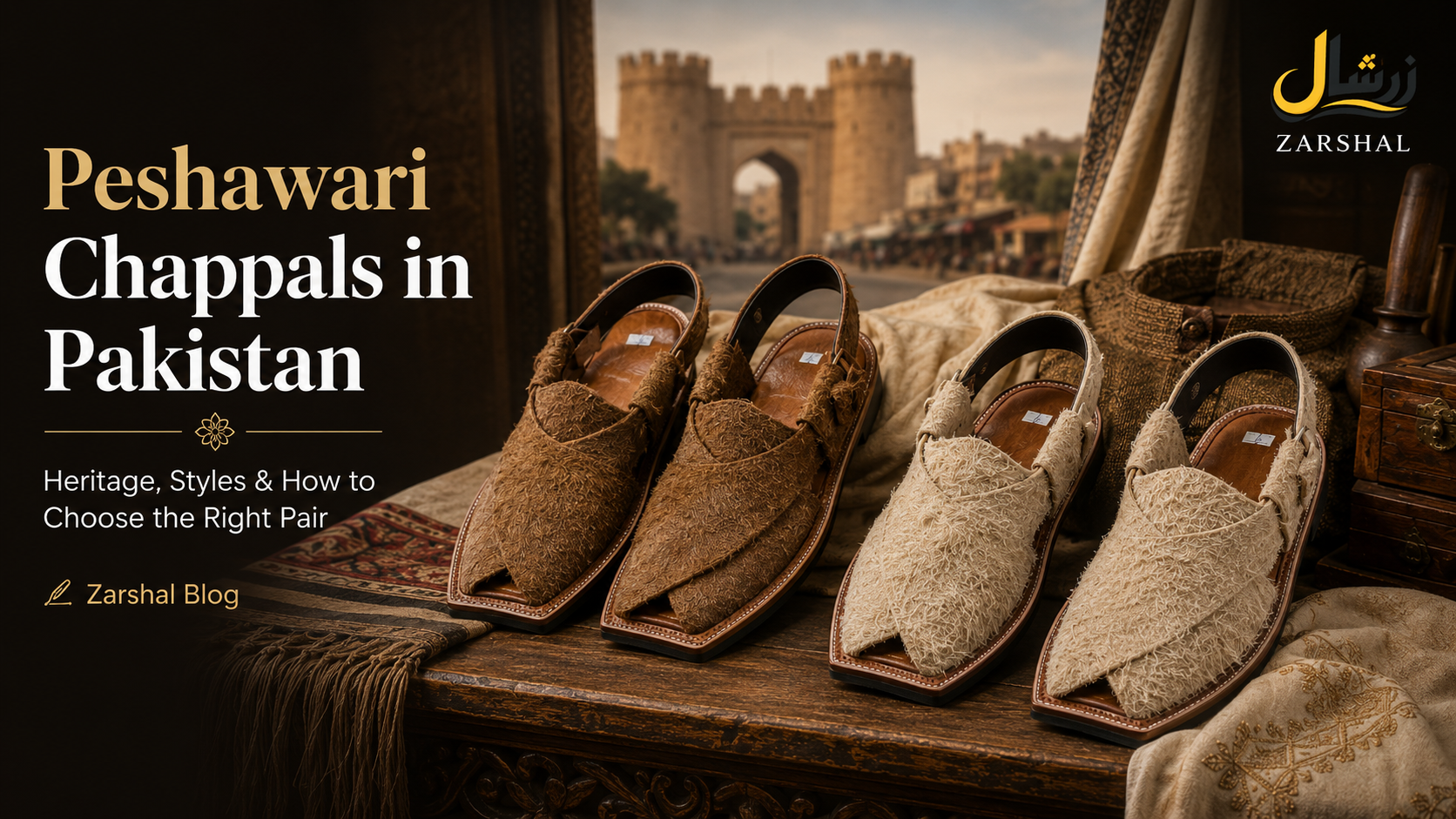
Peshawari chappals are part of Pakistan’s traditional footwear identity, but choosing a pair today involves much more than picking a familiar black or brown design. Pakistani shoppers can now choose between Kaptaan, Takidar, Panjedar, Smart Zalmi, Norozi, suede and different sole constructions, each suited to different outfits, occasions and wearing preferences.
The traditional craft remains closely connected with Peshawar, Charsadda and Khyber Pakhtunkhwa. At the same time, modern makers have introduced new colors, textures, footbeds and sole constructions without removing the character that makes Peshawari footwear recognizable. APP describes the craft as a multi-stage process involving sole preparation, leather shaping, stitching and finishing, reflecting the skilled work behind traditional production.
If you are choosing Peshawari chappals online in Pakistan, this guide will help you understand the main styles, compare materials and soles, judge fit, match footwear with Pakistani clothing and identify the Zarshal options that suit your needs.
Key takeaway: A Peshawari chappal is traditional Pakistani footwear shaped by regional craftsmanship, open or semi-open construction and a strong connection with Pashtun dress. The right pair depends on more than appearance. Material, sole construction, fit, comfort, outfit, occasion and care requirements should all guide your choice.
What Makes a Peshawari Chappal Different?
Peshawari chappals stand apart from ordinary casual sandals because design and cultural identity work together. Traditional forms use a structured upper, secure foot coverage and a strong sole while keeping the footwear open enough for airflow.
That combination makes the chappal particularly suited to Pakistani clothing and daily routines. A pair can work with shalwar kameez for Jummah, a kurta pajama for family visits, or a waistcoat combination for a wedding without looking disconnected from the outfit.
Traditional Design and Open Construction
The exact construction changes between styles, but Peshawari chappals commonly use an open or semi-open form that makes them easy to wear with Eastern clothing. The structure provides more foot coverage than a basic slide while still allowing more airflow than a closed shoe.
Open construction is particularly useful during Pakistan’s warmer months. It also suits situations where footwear is removed and worn again often, such as mosque visits, homes and traditional gatherings.
Craftsmanship From Peshawar and Charsadda
The identity of Peshawari chappals is closely linked with Khyber Pakhtunkhwa and the artisan communities around Peshawar and Charsadda. Traditional production can involve several skilled stages, from preparing the sole and shaping the upper to stitching, assembly and finishing.
The important lesson for a shopper is not to assume every product is built identically simply because it carries the Peshawari name. Material, upper construction, stitching, footbed and sole type can change from one design to another.
A Natural Part of Pakistani Dressing
Traditional footwear works because it belongs naturally with the clothes Pakistani men already wear.
Black and brown designs can create a restrained finish with white, cream, grey, navy and earth-tone shalwar kameez. More distinctive double-shade, textured or suede options can add contrast when the clothing itself is simple.
For a first look at the different design families, explore the Zarshal Peshawari Chappal collection before deciding which style suits your wardrobe.
How Traditional Peshawari Chappals Became Modern Fashion
Modern Peshawari chappals have not replaced the older footwear tradition. They have expanded it.
Classic leather styling still exists, but shoppers can now find suede finishes, dotted textures, double-shade uppers, medium soles, double soles, padded footbeds and grip-focused constructions. Zarshal’s current Peshawari collection itself includes Kaptaan, Norozi, Smart Zalmi, suede and medium-sole variations, showing how broad the category has become.
From Classic Colors to Modern Finishes
Black remains one of the easiest colors to coordinate because it works with both Eastern and selected smart-casual outfits. Browns and camel shades create a warmer look, while off-white can work well with cream, beige, navy, maroon and lighter shalwar kameez combinations.
Double-shade footwear has a different purpose. Rather than disappearing into the outfit, it adds visible depth and makes the footwear a stronger part of the overall look.
Suede changes the texture rather than only the color. Its matte surface feels softer visually than smooth leather, which makes it useful for buyers who want traditional footwear with a more contemporary finish.
Modern Sole and Construction Choices
The sole now deserves as much attention as the upper.
Some Zarshal products use traditional tyre soles. Others use medium or double-sole constructions, while selected designs use grip-focused soles. A shopper should therefore decide whether the priority is traditional appearance, a more substantial sole profile, everyday grip, or a certain walking feel.
Takidar styles introduce another layer of choice. Double gear, triple gear and T-shape detailing affect the upper’s visual structure and can make the chappal look more pronounced than a simpler traditional design.
Main Types of Peshawari and Charsadda Chappals
Style names can become confusing when shopping online because several design families sit within the wider Peshawari and Charsadda footwear tradition.
Rather than asking which style is universally better, ask what you want the footwear to do for your wardrobe.
Kaptaan Chappal
Kaptaan chappals suit shoppers who want a recognizable Pakistani silhouette with enough versatility for both traditional and smart-casual dressing.
Zarshal’s Black Kaptaan Chappal uses a genuine leather upper, padded footbed and tyre sole. Its black finish is listed for shalwar kameez, kurta pajama, waistcoat, jeans and casual trousers, making it relevant for buyers who want one traditional style that can move between different outfits.
Takidar Chappal
Takidar is the better direction when the shopper wants the construction itself to contribute to the look.
Zarshal’s Takidar category currently includes double gear, triple gear, T-shape, woven and other variations. That makes the category useful for comparing a simple Takidar profile with more layered designs.
The Zarshal Takidar Chappal collection is therefore a logical place to browse when you already know you prefer a more structured upper.
Panjedar Chappal
Panjedar chappals carry a stronger classic Charsadda character. Zarshal describes the category around its distinctive multi-strap styling and traditional open fit.
The Black Panjedar Chappal is a useful example. Its current page specifies genuine leather, handcrafted artisan stitching and a tyre sole, making it suitable for buyers who prioritize traditional material and construction cues.
Smart Zalmi Chappal
Smart Zalmi works for shoppers who like traditional footwear but prefer a cleaner or more contemporary visual treatment.
Zarshal’s Black Doted Smart Zalmi Peshawari Chappal uses a leather upper, black dotted texture and structured sole. Its product page places it across daily wear, Jummah, Eid, weddings, family functions and office or business-casual settings.
Norozi Chappal
Norozi is a strong option when you want the footwear to look more prominent, especially when paired with occasion wear.
The Double Shade Quetta Norozi Chappal with Double Sole uses a leather upper, double-shade finish and double-sole construction. Zarshal lists it with shalwar kameez, kurta pajama, waistcoats, prince coats and selected smart-casual outfits.
Suede Peshawari Chappal
Suede suits buyers who want a softer surface texture and a less polished appearance.
Zarshal’s current suede collection includes blue, camel, dark brown, light blue, light brown and off-white designs. Material and sole construction differ between products, so each listing should be checked separately rather than assuming every suede pair has the same build.
Browse the Zarshal Suede Chappal collection if material texture is one of your main selection criteria.
Peshawari Chappal Style Comparison
The table below is a decision guide rather than a universal specification sheet. Exact material and construction should always be confirmed on the individual product page.
| Style | Design Character | Material Direction | Construction Focus | Best Suited To | Outfit Direction | Care |
|---|---|---|---|---|---|---|
| Kaptaan | Clean traditional-modern profile | Product-dependent, with genuine leather on verified Black Kaptaan | Traditional structure with comfort-focused options | Versatile daily and occasion wear | Shalwar kameez, kurta pajama, waistcoat, selected jeans and trousers | Follow material-specific care |
| Takidar | Structured and visually detailed | Product-dependent | T-shape, double gear, triple gear and other variations | Buyers who want visible construction detail | Traditional wear, Eid, gatherings, weddings | Depends on upper material |
| Panjedar | Strong classic Charsadda character | Genuine leather on verified Black Panjedar | Multi-strap traditional design and tyre sole on verified product | Traditional Pakistani styling | Shalwar kameez, kurta pajama, waistcoat | Leather care |
| Smart Zalmi | Cleaner contemporary traditional look | Leather on verified Black Doted Smart Zalmi | Textured finish with structured sole | Daily, social and semi-formal traditional wear | Eastern outfits, selected office looks | Leather care where applicable |
| Norozi | More distinctive visual profile | Leather on verified Double Shade Quetta Norozi | Double sole on verified product | Occasion wear and stronger styling | Shalwar kameez, waistcoat, prince coat | Leather care |
| Suede | Soft matte appearance | Suede | Varies by product | Contemporary traditional dressing | Kurta pajama, shalwar kameez, selected smart casual | Gentle suede-specific care |
How to Choose the Right Peshawari Chappal
A good product choice starts with how you plan to wear the footwear, not with the product name alone.
Choose by Material
If you prefer a traditional smooth surface, look at verified leather styles. Genuine leather appears on Zarshal products such as the Black Kaptaan, Black Panjedar and Black Double Gear Takidar T-Shape.
If you prefer a softer matte appearance, suede gives the outfit a different texture. The Off White Suede Peshawari Chappal, for example, uses a suede upper and is designed to coordinate with both light and dark Eastern clothing.
Material wording matters online. A product described as “leather-style” should not automatically be treated as genuine leather. Zarshal’s Double Shade Triple Gear Takidar Charsadda Chappal specifically lists a premium leather-style upper, so buyers should rely on the stated specification instead of assuming a different material.
Choose by Sole Construction
A tyre sole is a strong traditional option seen on verified Zarshal products including the Black Kaptaan, Black Panjedar and Black Double Gear Takidar T-Shape.
A double sole creates a more substantial profile. On the Double Shade Quetta Norozi, the double sole is paired with a leather upper and two-tone finish, making it relevant when both structure and appearance matter.
For buyers who prioritize grip-focused construction, Zarshal’s Black Vibram Sole Peshawari Chappal uses a handmade leather upper and a Vibram-style durable grip sole. The wording matters because the live page describes the sole as Vibram-style rather than making a separate brand-authentication claim.
Choose by Comfort Preference
Look at the footbed as well as the sole.
The Black Kaptaan and Black Double Gear Takidar T-Shape both list padded footbeds, which makes them more relevant when you want cushioning alongside traditional styling.
A secure fit matters just as much as padding. A soft footbed cannot compensate for a pair that moves excessively or presses the foot in the wrong places.
Choose by Occasion
For daily wear, prioritize comfortable fit, practical construction and a color that works with several outfits.
For Jummah, black, brown and other restrained traditional finishes pair easily with shalwar kameez and kurta pajama.
For Eid, you can keep the footwear understated or use texture, double shade or more detailed construction to make it a stronger part of the outfit.
For weddings and mehndi, Takidar and Norozi designs are useful when you want more visible structure. A waistcoat or prince coat can also support a more prominent chappal without making the outfit feel mismatched.
For office or smart-casual wear, cleaner black designs such as Kaptaan or Smart Zalmi are easier to coordinate than highly decorative footwear.
Choose by Color
Black is the easiest starting point if you want maximum outfit flexibility.
Brown and camel work naturally with cream, beige, olive and other warm shades. Off-white gives a lighter finish and can work especially well with white, cream, navy, maroon, grey and brown clothing, according to Zarshal’s suede product guidance.
Double shade is better when you want the footwear to be noticed. Use it with a cleaner outfit so the clothing and chappal do not compete for attention.
Zarshal Picks for Different Wearing Needs
The most useful way to recommend a Peshawari chappal is to match a need with a verified feature.
Black Panjedar Chappal for Traditional Charsadda Styling
Need: You want a classic Pakistani chappal with strong traditional character.
Feature: The Black Panjedar Chappal uses genuine leather, artisan stitching and a tyre sole.
Benefit: The multi-strap Panjedar structure gives the footwear a traditional visual identity while black keeps outfit matching simple.
Buying reason: Choose this direction if heritage styling matters more to you than a highly modern surface treatment.
Black Kaptaan Chappal for Versatility
Need: You want one traditional style that can work across everyday and occasion dressing.
Feature: Zarshal lists a genuine leather upper, padded footbed and tyre sole on the Black Kaptaan.
Benefit: The padded base supports comfort, while the black Kaptaan profile works across shalwar kameez, kurta pajama, waistcoats and selected casual outfits.
Buying reason: It suits the buyer who wants traditional character without limiting the pair to one type of clothing.
Explore the Zarshal Black Kaptaan Chappal if this matches your wearing pattern.
Black Double Gear Takidar T-Shape for Construction Detail
Need: You prefer a more structured upper but still want a versatile black chappal.
Feature: The live product page confirms a genuine leather upper, T-shape front, double gear Takidar styling, padded footbed and tyre sole.
Benefit: The T-shape and double gear add visual depth while the black finish remains easy to coordinate.
Buying reason: It suits a shopper who finds a plain chappal too simple but does not want an overly decorative design.
Double Shade Triple Gear Takidar for a Stronger Visual Statement
Need: You want traditional footwear that becomes a noticeable part of the outfit.
Feature: The product uses a double-shade finish, triple gear Takidar design, open slip-on fit, leather-style upper and everyday-use sole.
Benefit: Layered construction and a two-tone finish add depth compared with a plain single-color style.
Buying reason: Consider it for Eid, weddings, mehndi, family gatherings or Eastern office dressing when you want stronger design character.
Off White Suede Peshawari Chappal for a Softer Modern Finish
Need: You want traditional footwear without a dark polished surface.
Feature: The Off White Suede Peshawari Chappal uses a suede upper with a soft matte appearance.
Benefit: Off-white can coordinate with light Eastern clothing while suede gives the outfit a softer texture.
Buying reason: It suits shoppers who want a contemporary material treatment while keeping Peshawari-inspired styling.
Double Shade Quetta Norozi for Occasion Dressing
Need: You want a more prominent sole and stronger visual treatment.
Feature: The Double Shade Quetta Norozi uses a leather upper, double-shade finish and double-sole construction.
Benefit: The stronger sole profile and two-tone upper create a more noticeable finish alongside formal Eastern clothing.
Buying reason: It is especially relevant for shalwar kameez, waistcoats, prince coats, weddings, Eid and family occasions.
Black Doted Smart Zalmi for Modern Traditional Wear
Need: You want black footwear with more surface interest than a plain finish.
Feature: The Black Doted Smart Zalmi uses a leather upper, dotted texture and structured sole.
Benefit: The texture adds detail while the black color keeps the pair relatively easy to coordinate.
Buying reason: It suits men who want a cleaner contemporary look for traditional, social and selected office outfits.
Once you know your preferred material, sole and style family, compare the relevant Zarshal product page rather than choosing from appearance alone.
How Should a Peshawari Chappal Fit?
Fit is one of the biggest online-ordering decisions because traditional chappal construction can feel different from sneakers or closed formal shoes.
Your foot should sit securely without strong pressure from the upper. At the same time, excessive movement during walking usually means the fit is too loose.
Measure From Heel to Longest Toe
Zarshal’s current sizing guidance on several product pages recommends measuring from the back of the heel to the longest toe and comparing that measurement with the available size information.
Measure the foot while standing naturally. If one foot is slightly longer, use the larger measurement when reviewing the size information.
Consider Foot Width
Length is only one part of fit.
A broad foot may feel different inside a structured upper than a narrow foot of the same length. Do not rely on stretching to correct the wrong size. Zarshal’s Norozi guidance specifically advises considering foot width and contacting support when sizing help is needed.
If you are unsure, use Zarshal’s product and sizing support contact options before placing the order.
Leather or Suede: Which Should You Choose?
Choose leather when you prefer a classic appearance, a smoother surface and traditional visual character. Leather also works naturally with black, brown and other conventional Peshawari footwear colors.
Choose suede when texture matters more. Its matte surface creates a softer look and can make lighter or less common colors feel more refined.
Care should affect the decision. Smooth leather and suede should not be maintained in the same way, so a shopper who prefers very simple upkeep may make a different choice from someone who is comfortable maintaining suede.
Which Sole Type Fits Your Wearing Needs?
A sole changes the feel, profile and intended use of the footwear.
Tyre Sole
A tyre sole appears on several verified Zarshal leather designs, including Black Kaptaan, Black Panjedar and Black Double Gear Takidar T-Shape. These products position the construction for regular Pakistani wear and grip.
Medium Sole
Medium-sole styles sit between a lighter-looking base and a more prominent double-sole design. Zarshal currently maintains Medium Sole as a Peshawari subcategory and also uses the term on suede and Takidar products.
Choose this direction when you want sole structure to be visible without moving to the strongest profile.
Double Sole
Double sole is the option to examine when you prefer a more substantial base.
The verified Double Shade Quetta Norozi combines its double sole with a leather upper and distinctive two-tone finish, which makes the construction part of both the wearing experience and the visual design.
Grip-Focused Sole
A grip-focused construction is useful when sole traction is one of your main priorities.
The Black Vibram Sole Peshawari Chappal combines a handmade leather upper with a Vibram-style grip-focused sole while retaining an open traditional profile.
How to Style Peshawari Chappals With Pakistani Clothing
Peshawari chappals look most convincing when the footwear supports the clothing rather than fighting it.
With Shalwar Kameez
For a clean traditional look, black leather is difficult to misuse. It works especially well with white, cream, grey, navy and other neutral shalwar kameez colors.
If the outfit is very plain, a double-shade Takidar or Norozi can add more visual interest.
With Kurta Pajama
A kurta pajama allows more freedom.
For Jummah or family visits, a simple leather Kaptaan or Panjedar keeps the look restrained. For Eid or a function, textured Smart Zalmi, Takidar or a distinctive suede finish can make the footwear more visible.
With a Waistcoat
A waistcoat already adds structure to the outfit, so the chappal should support that level of dressing.
Black leather, detailed Takidar and selected Norozi styles all work naturally in this context. Match the footwear color with the overall palette rather than only matching it with the waistcoat.
With a Prince Coat
A prince coat creates a more formal silhouette.
A double-shade Norozi or refined leather design can provide enough visual presence to balance the outfit. Keep highly detailed footwear paired with a cleaner clothing palette.
With Jeans or Trousers
Not every Peshawari design needs to remain limited to Eastern clothing.
Zarshal specifically lists Black Kaptaan with jeans and casual trousers, while its Smart Zalmi range also supports modern and office-oriented styling on relevant product pages.
Cleaner shapes and neutral colors usually make this transition easier.
Which Peshawari Chappal Works for Each Occasion?
For everyday wear, choose around fit, walking comfort, sole practicality and simple outfit matching. A Black Kaptaan or Smart Zalmi-style option fits this need well when its specific construction matches your preference.
For Jummah, traditional black or brown leather works naturally with shalwar kameez and kurta pajama. Panjedar is especially relevant if you want stronger Charsadda character.
For Eid, decide whether the clothing or footwear should carry more of the visual detail. A clean outfit can support suede, dotted, Takidar or double-shade footwear without becoming busy.
For weddings and mehndi, Norozi and detailed Takidar styles are worth comparing. They give the footwear enough visual presence to work with waistcoats, prince coats and more formal traditional dressing.
For family gatherings, versatility matters more. A style that works with several shalwar kameez colors will be easier to use repeatedly.
For office or smart-casual wear, simple black Kaptaan or Smart Zalmi designs create a cleaner transition between traditional and modern clothing.
How to Care for Peshawari Chappals
Care should follow the material, not just the product category.
Leather Chappal Care
For leather footwear:
- Remove dust with a soft, dry cloth.
- Avoid soaking the footwear in water.
- Allow damp leather to dry naturally.
- Keep it away from strong direct heat.
- Store the pair in a clean, dry place.
- Use a material-appropriate leather-care product when needed.
Zarshal gives similar care directions across its verified leather product pages.
Suede Chappal Care
Suede needs gentler treatment.
- Remove surface dust with a soft suede brush.
- Brush gently rather than scrubbing.
- Avoid soaking the upper.
- Keep it away from mud and excessive moisture when possible.
- Avoid strong household cleaning products.
- Let damp suede dry naturally.
- Keep the footwear away from heaters and direct heat.
- Store it in a dry, ventilated place.
Zarshal specifically notes that dirt can show more easily on off-white suede, so regular gentle cleaning matters.
How to Judge Peshawari Chappal Quality When Shopping Online
A product photograph should start your decision, not finish it.
Check the Exact Material Description
Read the wording carefully.
“Genuine leather,” “leather upper,” “suede upper” and “leather-style upper” are not interchangeable descriptions. A trustworthy buying decision starts with the specification actually shown for that product.
Examine the Construction
Look at the shape of the upper, visible stitching, sole thickness, footbed and side profile.
If a product uses terms such as double gear, triple gear, T-shape, medium sole or double sole, make sure the photographs and written specifications explain what you are selecting.
Check Product Images Closely
Online footwear can look different under lighting or different screen settings. Zarshal itself advises customers that finish, texture and shade can appear slightly different due to lighting, screen settings and natural material characteristics.
Inspect multiple angles whenever available.
Review Sizing Before Ordering
Do not assume the size that works in a sneaker automatically gives the same fit in a structured Peshawari upper.
Measure the foot, review the current size options and consider width before selecting.
Review Current Store Policies
Delivery timing and order handling can change according to location, courier operations and other conditions. Zarshal’s current shipping policy explains that order confirmation may happen through phone, email, SMS or WhatsApp and that delivery timing varies by location and courier conditions.
Return eligibility also depends on the current store policy and product condition, so check the active policy before ordering rather than relying on an old article or screenshot.
Why Peshawari Chappals Still Matter in Modern Pakistani Fashion
Peshawari chappals survive because the design has been able to change without losing its identity.
The connection with Pashtun culture and Khyber Pakhtunkhwa craftsmanship remains visible, but shoppers can now choose between traditional leather, suede, textured finishes, different sole profiles and construction details. That allows the same footwear tradition to serve both a classic white shalwar kameez and a more contemporary smart-casual outfit.
For Pakistani buyers, the strongest choice is not necessarily the most decorative or the most traditional. The strongest choice is the pair whose material, fit, sole, styling and maintenance needs match the way you will actually wear it.
Find the Peshawari Chappal Style That Fits You
If you want classic Charsadda character, start with Panjedar styles.
If you want traditional footwear with broad outfit flexibility, compare Kaptaan options.
If you want visible construction detail, explore Takidar and its double gear, triple gear and T-shape variations.
If you want modern texture, compare Smart Zalmi and suede designs.
If you want a stronger occasion look, consider Norozi or double-shade Takidar styles.
If you care most about sole construction, compare tyre, medium, double and grip-focused options before choosing by upper design.
The Zarshal Charsadda Chappal collection and Peshawari range make it easier to compare these design families within the same store. Check the specific product page for current material, sizing, construction and ordering information before choosing your pair.
Final CTA
Explore Zarshal’s Peshawari and Charsadda chappal collections, compare the material, sole, fit and design details, and choose the pair that best suits your clothing, occasions and everyday wearing needs.
Frequently Asked Questions
What makes Peshawari chappals different from ordinary sandals?
Peshawari chappals combine regional Pakistani craftsmanship, a structured upper, open or semi-open construction and a stronger cultural connection with Pashtun clothing. Their design also supports traditional outfits in a way that ordinary casual sandals may not.
Where did Peshawari chappals originate?
Peshawari chappals are associated with Peshawar and the wider Khyber Pakhtunkhwa region. Their craft has been maintained by generations of regional shoemakers and remains closely linked with Pashtun culture.
What is the difference between Peshawari and Charsadda chappals?
Peshawari chappal works well as a broad footwear tradition, while Charsadda is strongly associated with regional production and specific style families such as Panjedar and Takidar. Product naming varies between sellers, so shoppers should compare construction and specifications rather than relying only on the label.
What is the difference between Kaptaan, Takidar, Panjedar, Smart Zalmi and Norozi?
Kaptaan generally gives a clean traditional-modern profile. Takidar emphasizes structured detailing, Panjedar has stronger multi-strap traditional character, Smart Zalmi moves toward cleaner contemporary styling, and Norozi can provide a more distinctive occasion-focused appearance.
Exact construction still depends on the product.
Should I choose leather or suede Peshawari chappals?
Choose leather if you prefer a classic smooth finish and traditional appearance. Choose suede if you prefer a soft matte texture and are comfortable following more careful cleaning practices.
What is the difference between medium sole and double sole chappals?
A medium sole gives a more moderate sole profile, while a double sole creates a more substantial base. Construction varies by product, so check the exact listing before ordering.
How should Peshawari chappals fit?
The foot should feel secure without excessive pressure from the upper or unnecessary movement while walking. Foot width matters alongside length.
How do I measure my feet before ordering Peshawari chappals online?
Measure from the back of your heel to the end of your longest toe while your foot is positioned naturally. Compare the measurement with the current sizing information on the product page.
Which Peshawari chappal is suitable for everyday wear?
Look for comfortable fit, practical sole construction and a versatile color. Black Kaptaan, selected Smart Zalmi styles and other simple leather designs can suit regular wear when their specific fit and construction meet your needs.
Which Peshawari chappal is suitable for Eid or weddings?
Takidar, Norozi, double-shade and selected suede designs are useful when you want the footwear to contribute more strongly to the outfit. Simpler black leather styles also work well when the clothing carries most of the detail.
Which Peshawari chappal works well with shalwar kameez?
Black leather Kaptaan, Panjedar and Takidar styles are easy to coordinate with many shalwar kameez colors. Suede, Norozi and double-shade options can work when you want more contrast or texture.
Can Peshawari chappals be worn with jeans or trousers?
Yes, selected cleaner styles can work with jeans and casual trousers. Zarshal specifically lists the Black Kaptaan for these outfit combinations.
How can I judge Peshawari chappal quality when shopping online?
Check material wording, stitching, upper shape, sole information, footbed details, multiple product images, sizing guidance and care instructions. Avoid assuming specifications that are not stated.
How do I care for leather and suede Peshawari chappals?
Leather can generally be wiped with a soft dry cloth and stored away from prolonged moisture and heat. Suede should be brushed gently with a suede brush, kept away from soaking and allowed to dry naturally if damp.